English
 Français
 Español
 Deutsch
 Italiano
 العربية







Tirana, Albania — October 26, 2026 — A significant milestone in interventional cardiology was achieved in Albania with the country's first OCT-guided percutaneous coronary intervention (PCI), performed at Spitali Universitar “Shefqet Ndroqi” in Tirana using the Vivolight P80 OCT system.
This landmark procedure marks an important step forward in the adoption of advanced intracoronary imaging and OCT-derived physiological assessment in Albania, bringing new capabilities for comprehensive coronary lesion evaluation into local clinical practice.
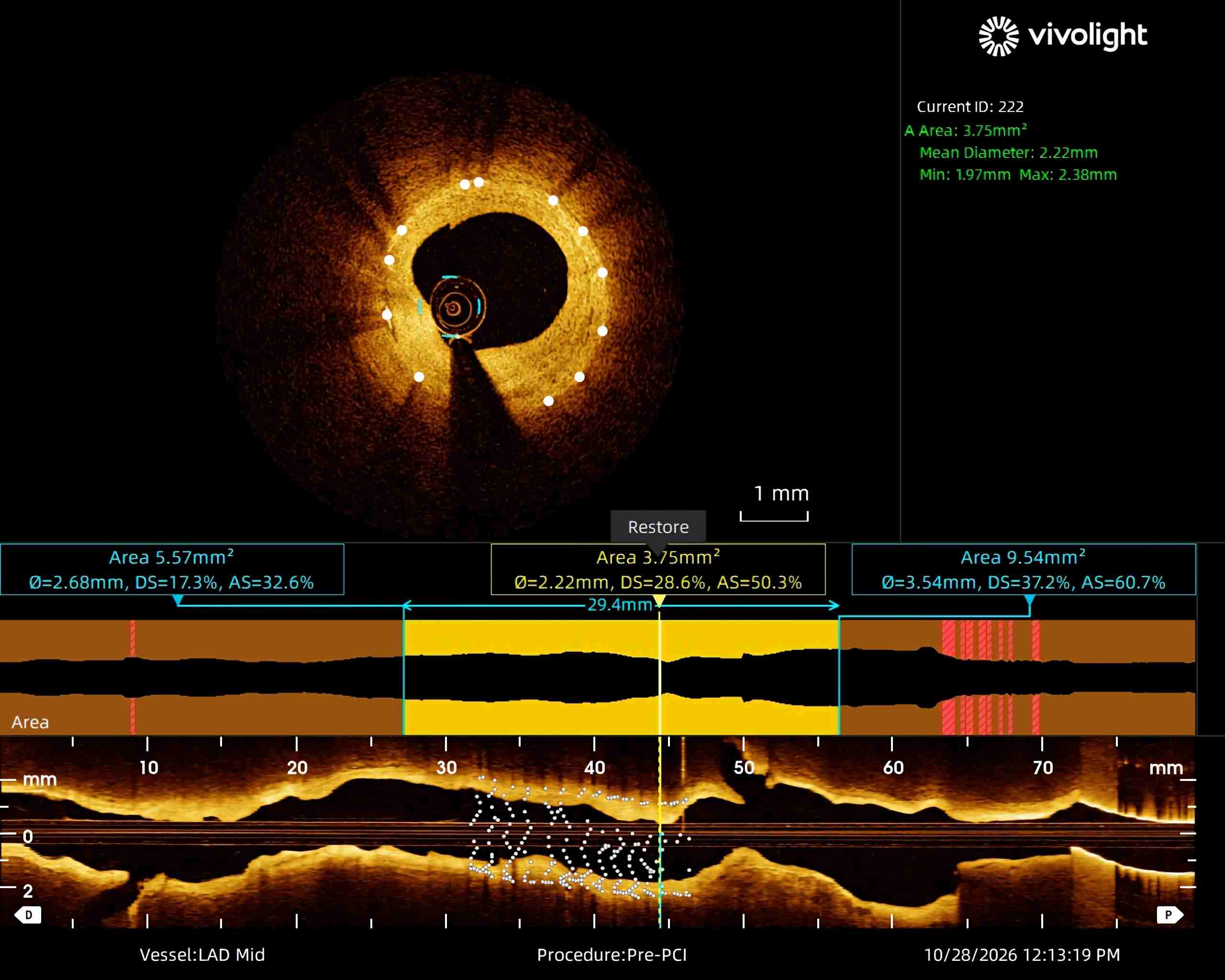
High-Resolution OCT Imaging Reveals the Mechanism of ISR
The procedure involved a patient with in-stent restenosis (ISR). Coronary angiography identified the restenotic lesion but could not adequately characterize the tissue morphology within the stented segment or clarify the underlying mechanism of ISR.
Using the Vivolight P80, the treating physician acquired high-resolution cross-sectional OCT images, enabling detailed visualization of the stent structure and intrastent tissue. The OCT images revealed neointimal hyperplasia within the stent, supporting neointimal hyperplasia as the predominant morphological mechanism of ISR in this case.
By revealing intrastent tissue characteristics that could not be adequately assessed by angiography alone, OCT helped the physician better understand the lesion and supported more informed treatment planning.
Integrating Morphological and Functional Assessment to Guide Intervention
In addition to detailed morphological imaging, the Vivolight P80 provided OCT-derived FFR assessment, offering functional information about the coronary lesion.
The pre-interventional OCT-FFR value was 0.82, close to the conventional 0.80 ischemic threshold. The physician interpreted this result together with the detailed OCT morphological findings and the patient's overall clinical presentation before deciding to proceed with PCI.
Lesion preparation was performed using plain and cutting balloons, followed by drug-coated balloon angioplasty. Post-procedural OCT and coronary angiography showed acute lumen gain and reduced residual stenosis. The post-procedural OCT-FFR value increased from 0.82 to 0.89, suggesting an improvement in coronary physiology following the intervention.
The combined morphological and OCT-derived physiological assessments provided complementary insights into the immediate procedural results, demonstrating the potential value of integrating intravascular imaging and functional assessment in the management of ISR.
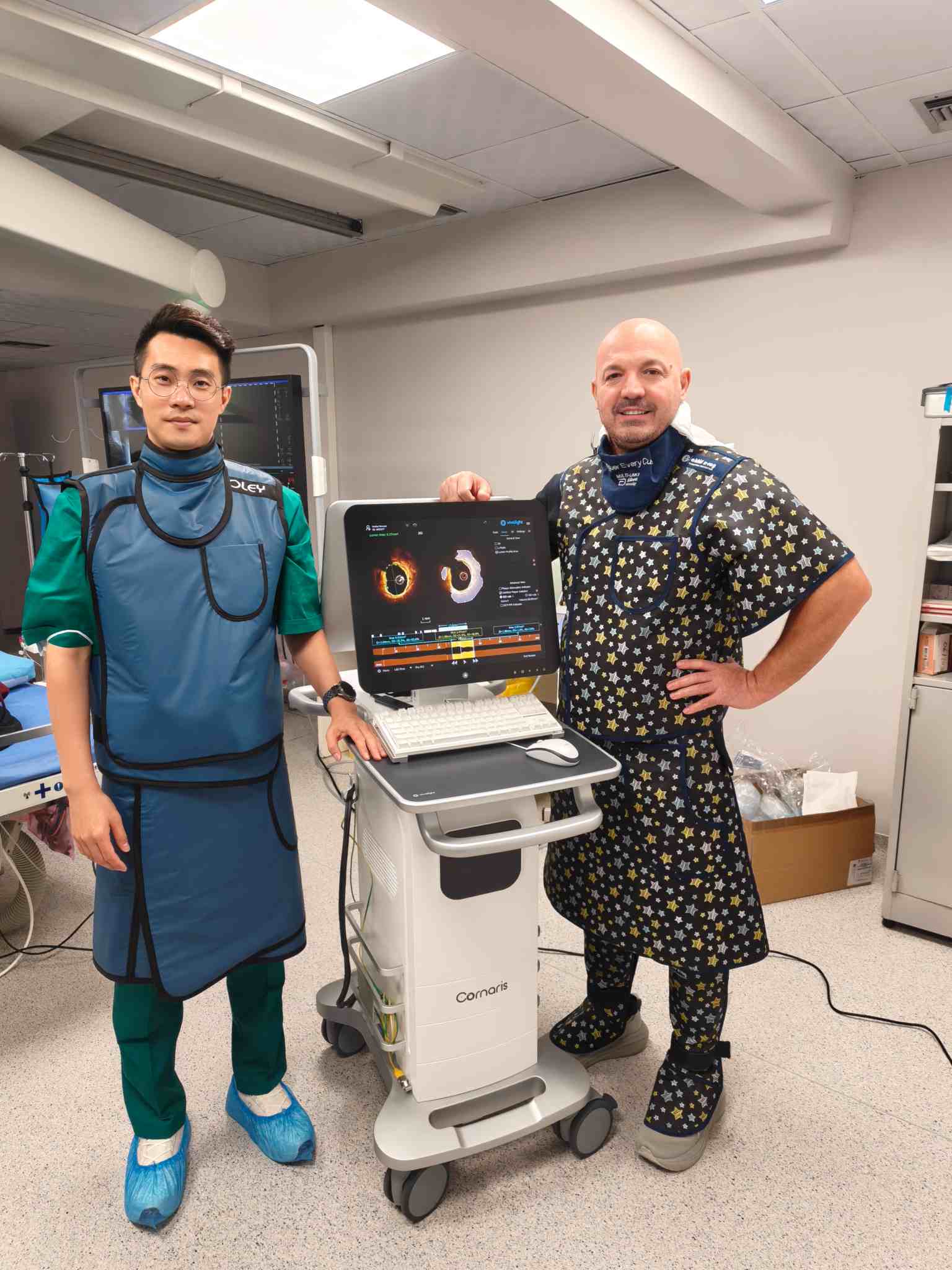
Advancing Precision PCI in Albania
The successful completion of Albania's first OCT-guided PCI represents more than the introduction of a new imaging technology. It marks an important advancement in the integration of intravascular imaging and functional assessment into local interventional cardiology practice.
By combining high-resolution visualization of coronary structures with OCT-derived physiological assessment, the Vivolight P80 provides physicians with complementary information to support lesion characterization, treatment planning, and post-interventional evaluation.
Vivolight Medical remains committed to advancing intravascular imaging technology and strengthening collaborations with healthcare professionals worldwide. This milestone in Albania reflects the company's continued efforts to bring innovative OCT solutions to more interventional cardiology centers and support the advancement of precision coronary intervention.

 IPv6 NETZWERK UNTERSTÜTZT